What we’re learning

Practice should teach us something


Research is part of practice.
We test what we think we know,
share what the work reveals,
and keep asking whether familiar measures are enough.

Can an Australian house be both open and airtight?

The most useful lesson from Passivhaus for warm-humid Australian housing may have little to do with achieving 0.6 ACH₅₀. It may be the decision to stop treating accidental air leakage as ventilation.

The most useful lesson from Passivhaus for warm-humid Australian housing may have little to do with achieving 0.6 ACH₅₀. It may be the decision to stop treating accidental air leakage as ventilation.

You cannot future-proof a home. But you can leave room for change.

We often talk about designing homes for the future. The difficulty is that we do not know what that future will be. Perhaps the better question is not how to predict what people will need, but how architecture can make it easier for them to change their homes when they do.

We often talk about designing homes for the future. The difficulty is that we do not know what that future will be. Perhaps the better question is not how to predict what people will need, but how architecture can make it easier for them to change their homes when they do.

The hottest part of the day may not be the most important

We usually think about overheating as a daytime problem. New research from southeast Queensland suggests the temperature of our bedrooms overnight deserves much more attention.

We usually think about overheating as a daytime problem. New research from southeast Queensland suggests the temperature of our bedrooms overnight deserves much more attention.

What does a star rating leave out?

A good star rating tells us something important about a home. But it does not tell us everything about what living there will be like. Understanding what a rating measures — and what it leaves unanswered — can lead to better decisions.

A good star rating tells us something important about a home. But it does not tell us everything about what living there will be like. Understanding what a rating measures — and what it leaves unanswered — can lead to better decisions.

Are we designing homes for the climate they will actually live in?
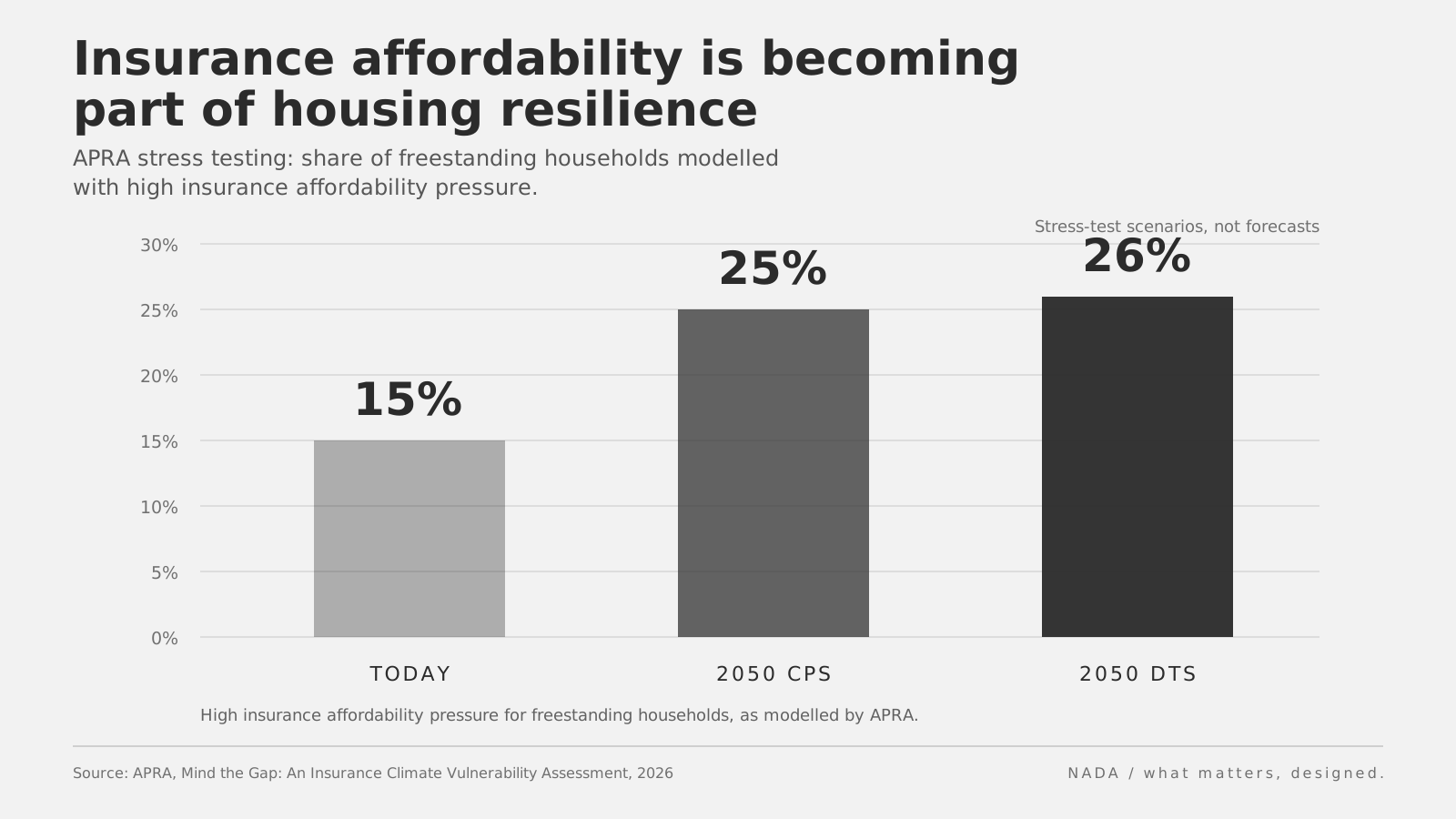
A home designed today may still be occupied in 2070. Australian research is exposing a simple mismatch: we build for decades, but much of our regulatory thermal assessment still describes climate conditions drawn from the past.

A home designed today may still be occupied in 2070. Australian research is exposing a simple mismatch: we build for decades, but much of our regulatory thermal assessment still describes climate conditions drawn from the past.

A home does not overheat evenly

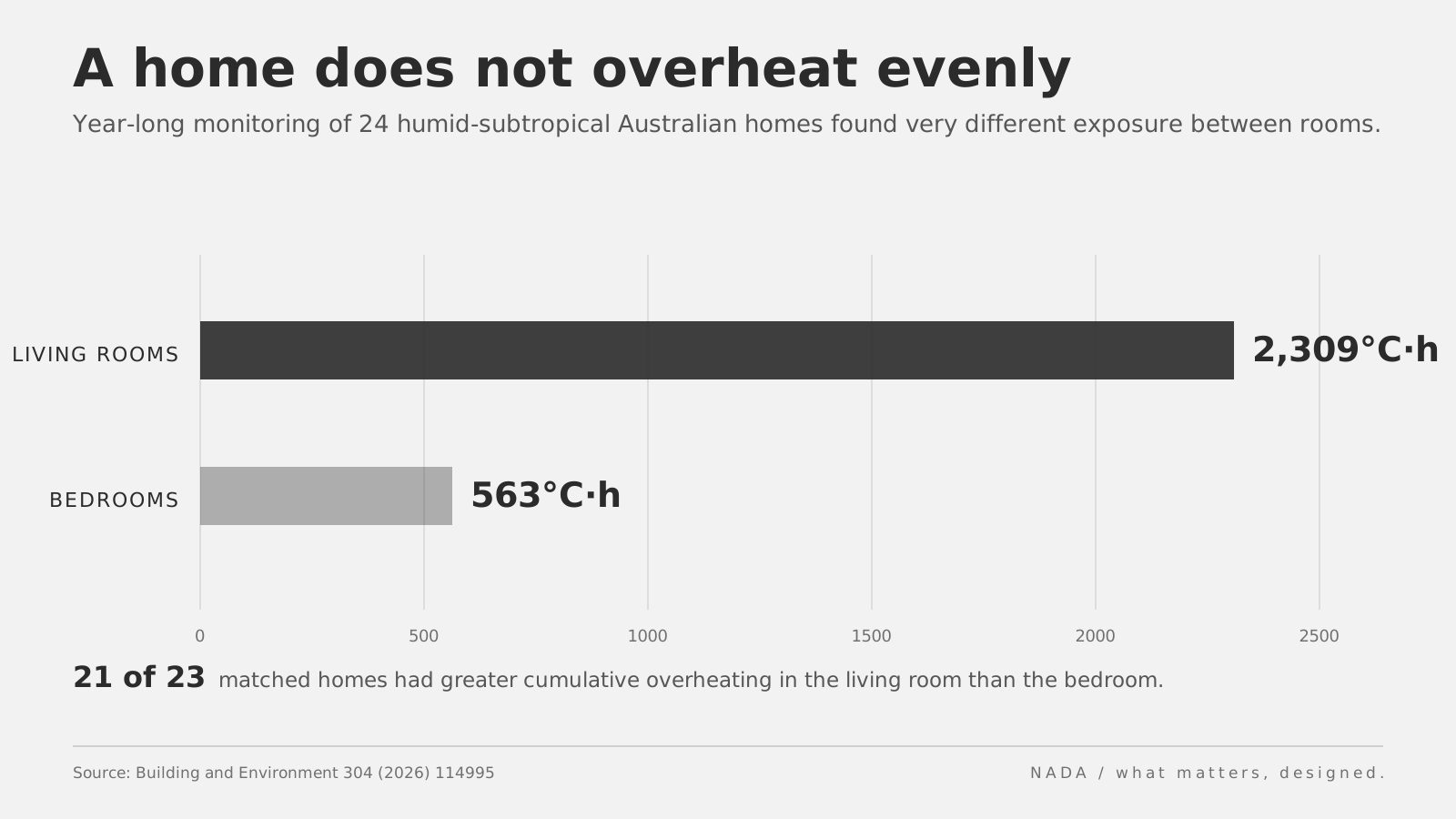
We often describe the thermal performance of a home with one number. A year-long Australian field study suggests an obvious but important complication: people experience buildings room by room, hour by hour.

We often describe the thermal performance of a home with one number. A year-long Australian field study suggests an obvious but important complication: people experience buildings room by room, hour by hour.

A resilient home should be able to recover

Surviving a flood, cyclone or storm is only part of resilience. The harder question is what happens the morning after: can the house be repaired, reoccupied and insured without turning one event into years of disruption?

Surviving a flood, cyclone or storm is only part of resilience. The harder question is what happens the morning after: can the house be repaired, reoccupied and insured without turning one event into years of disruption?